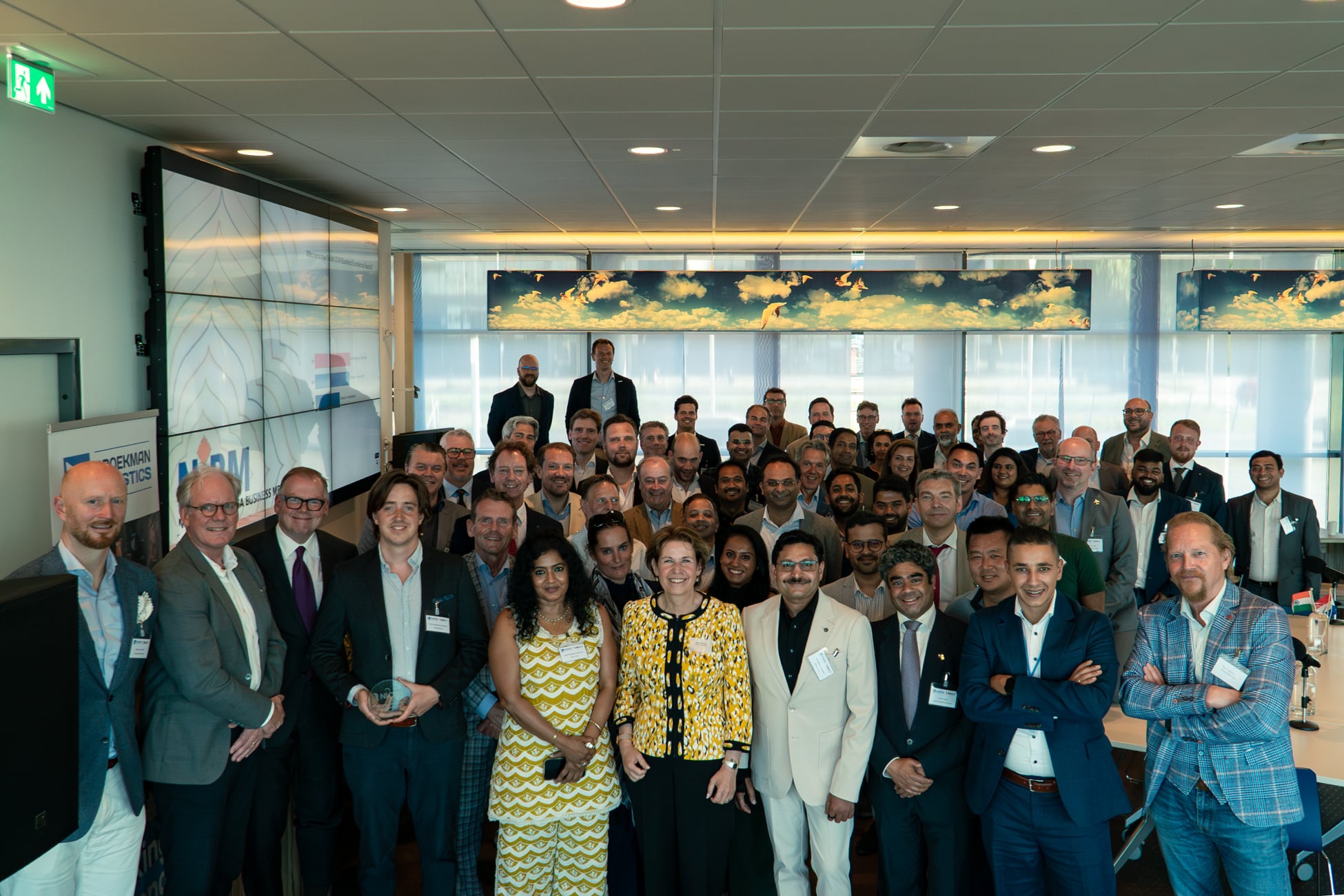
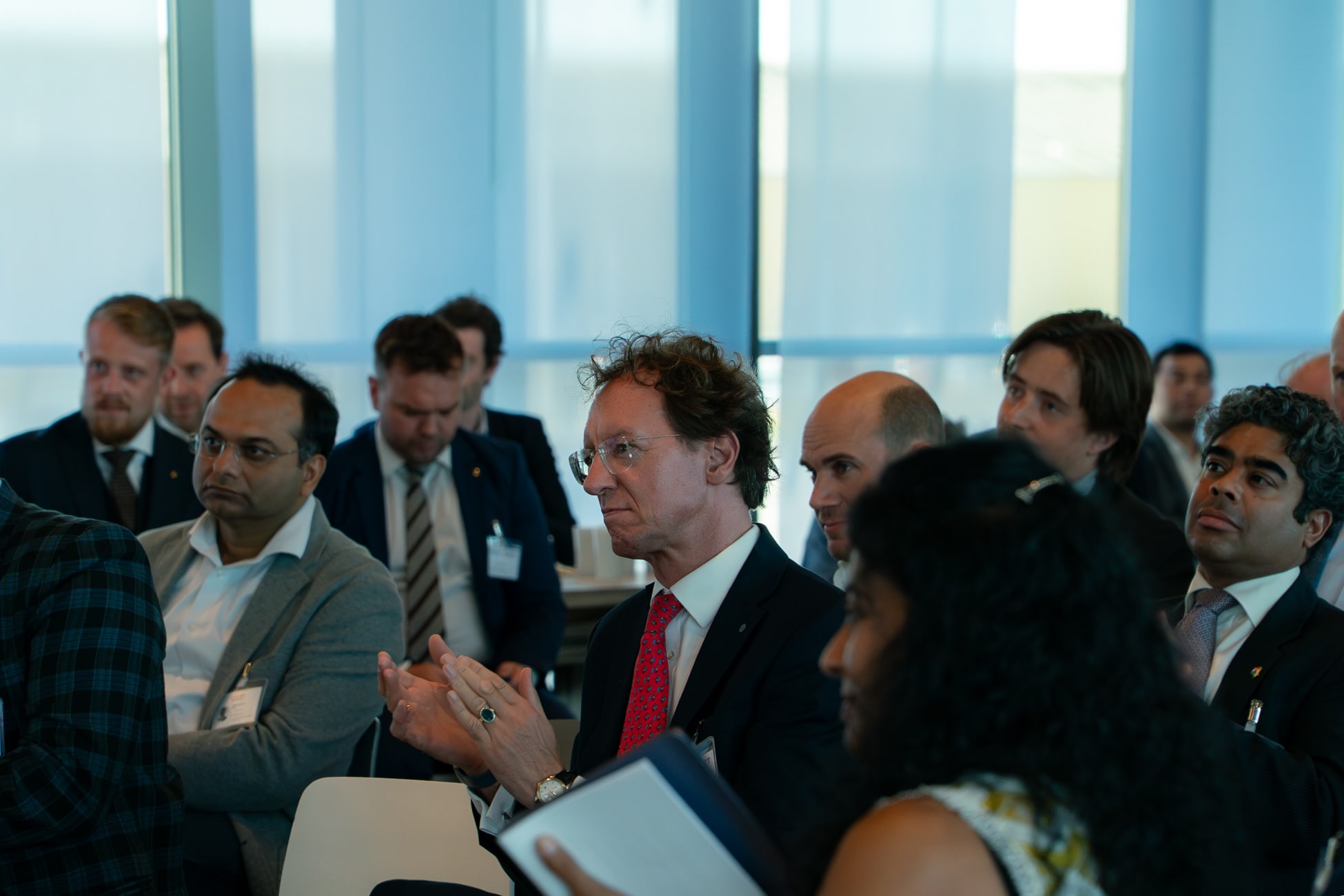
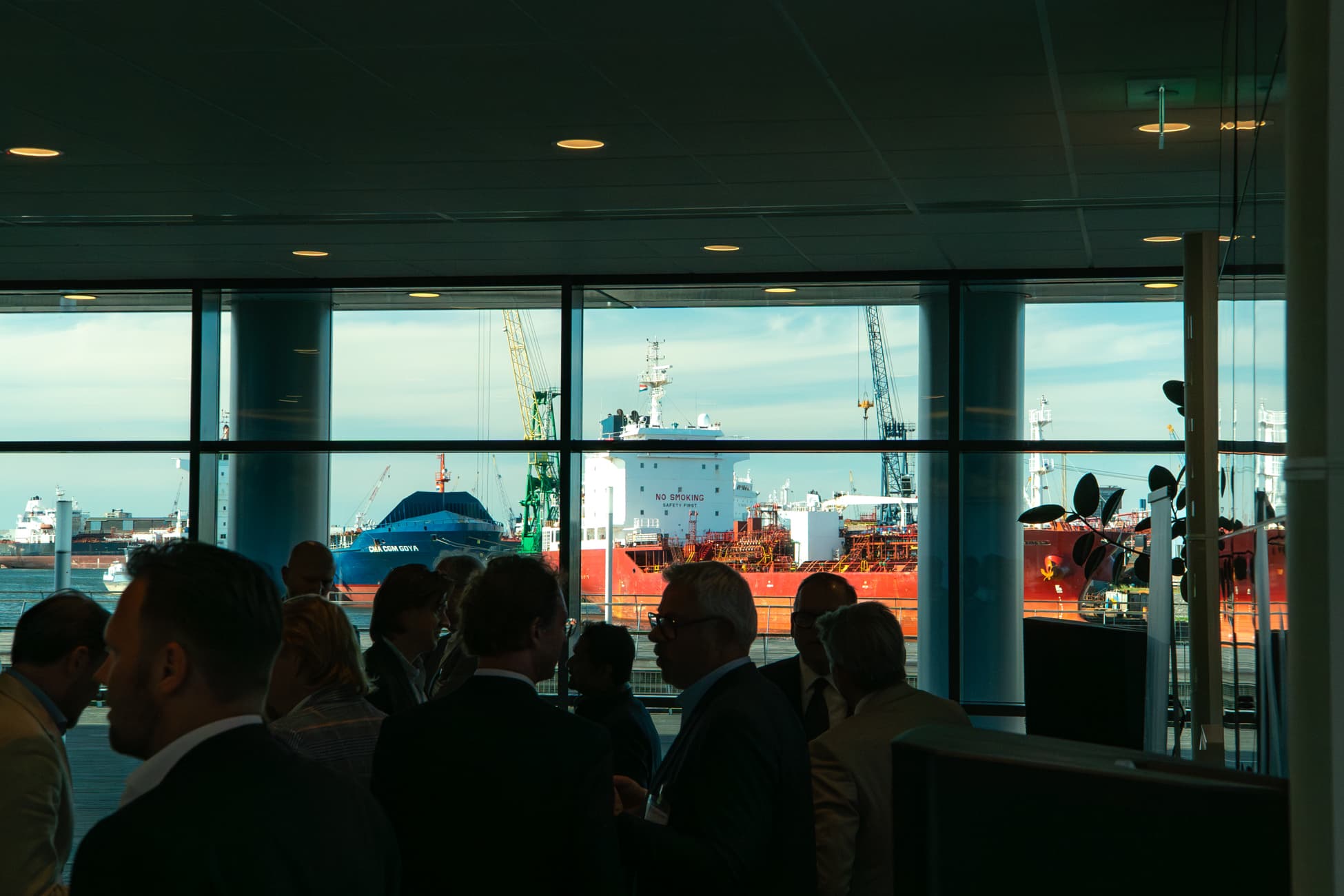
The annual Netherlands–India Business Meet (NIBM) took place in Rotterdam during the first week of July 2025. Organised by the Netherlands–India Chamber of Commerce and Industry (NICCT), this year’s edition focused on maritime and logistics cooperation under the theme Navigating Strategic Maritime & Shipping Opportunities in the Indo-Dutch Business Corridor.
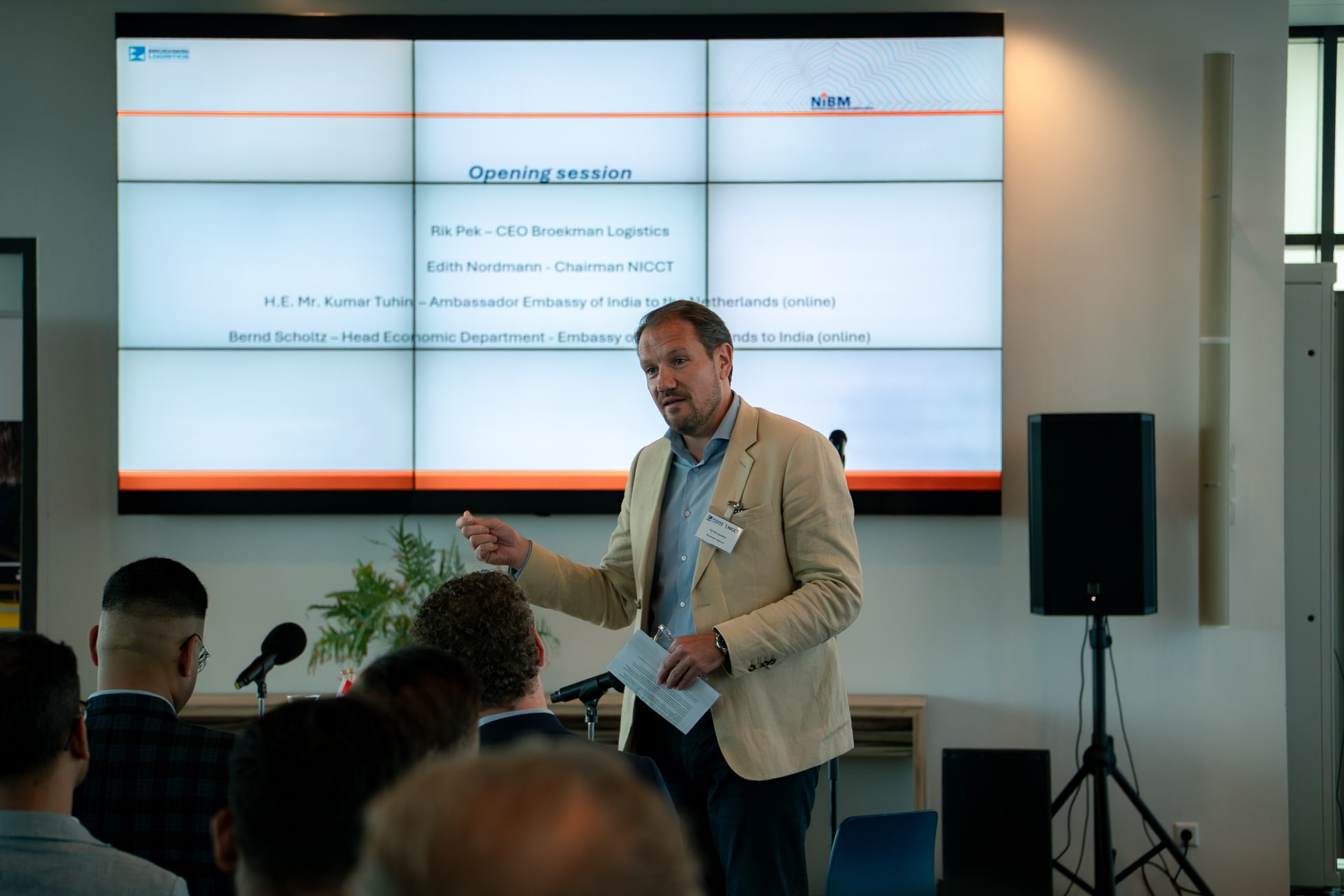
The event was hosted by Broekman Logistics, which opened its headquarters in the port of Rotterdam to policymakers, entrepreneurs, and industry experts from both countries. In his opening address, CEO Rik Pek emphasised the value of long-term relationships in international trade. According to him, the sector is not just about containers and numbers, but about understanding people, markets, and shared interests.
Pek illustrated his point with an anecdote about the rise of fast food in India. A cultural shift that unexpectedly led to logistics opportunities. Dutch potato processing machines found their way to the Indian market. “We now handle the shipping of hundreds of containers per project,” he said. Such opportunities, he emphasised, arise only when one understands the full context.
That context was further explained by Kumar Tuhin, the Indian Ambassador to the Netherlands. He outlined India’s investments in port development and logistics infrastructure. According to him, the country is catching up rapidly. The Maritime India Vision 2030 programme is rolling out dozens of initiatives focused on sustainability, efficiency, and digitalisation. India aims to reduce logistics costs and establish a network of 35 new logistics hubs. Close cooperation with the Netherlands is a key part of that strategy. A planned digital and green shipping corridor between Rotterdam and Indian ports is a notable example.
Bernd Scholtz, Head of Economic Affairs at the Dutch embassy in India, echoed this sentiment. He described the relationship between the two countries as “deep and diverse.” According to him, India’s economic scale and growth align well with Dutch expertise in logistics and sustainability. “Our cooperation in green hydrogen shows how we complement each other,” he said. The Port of Rotterdam is already preparing for the first Indian export of hydrogen carriers such as ammonia.
Structural trends were also addressed in the program. Jeroen Scholten, Global Trade Leader at EY, pointed out that companies have been trying to reduce their dependence on China for some time. “Ten years ago, it was still self-evident to produce everything in China. But due to political and economic uncertainty, companies are looking for alternatives. India is increasingly being seriously considered.”
Mark-Simon Benjamins of the Port of Rotterdam emphasized that India is now the fourth economy in the world. “That means the country is not only relevant as a production hub, but also as a trading partner in its own right. We want to play a facilitating role in that as a port.”
Yet practice is stubborn. Scholten mentioned the increasing complexity of European regulations. From CO2 levies to sustainability reporting: companies must prepare for a multitude of requirements. “The administrative burden is enormous. You need to know down to the energy level what your supplier uses.”
Pek also saw an opportunity for logistics service providers in this. “It’s our job to support customers with this. We ensure visibility in the chain and correct handling at customs.” At the same time, he admitted that many physical actions are still needed in India. “We are less efficient there than in Rotterdam, but progress is visible.”
The panel also looked ahead to sectors with potential. Chemicals, pharmaceuticals, and construction machinery were prominently mentioned. Pek cited the example of chemical plants being built in India and soon to begin exporting. Scholten noted that India is not yet at China’s level in terms of production consistency for some sectors. “But the gap is narrowing.”
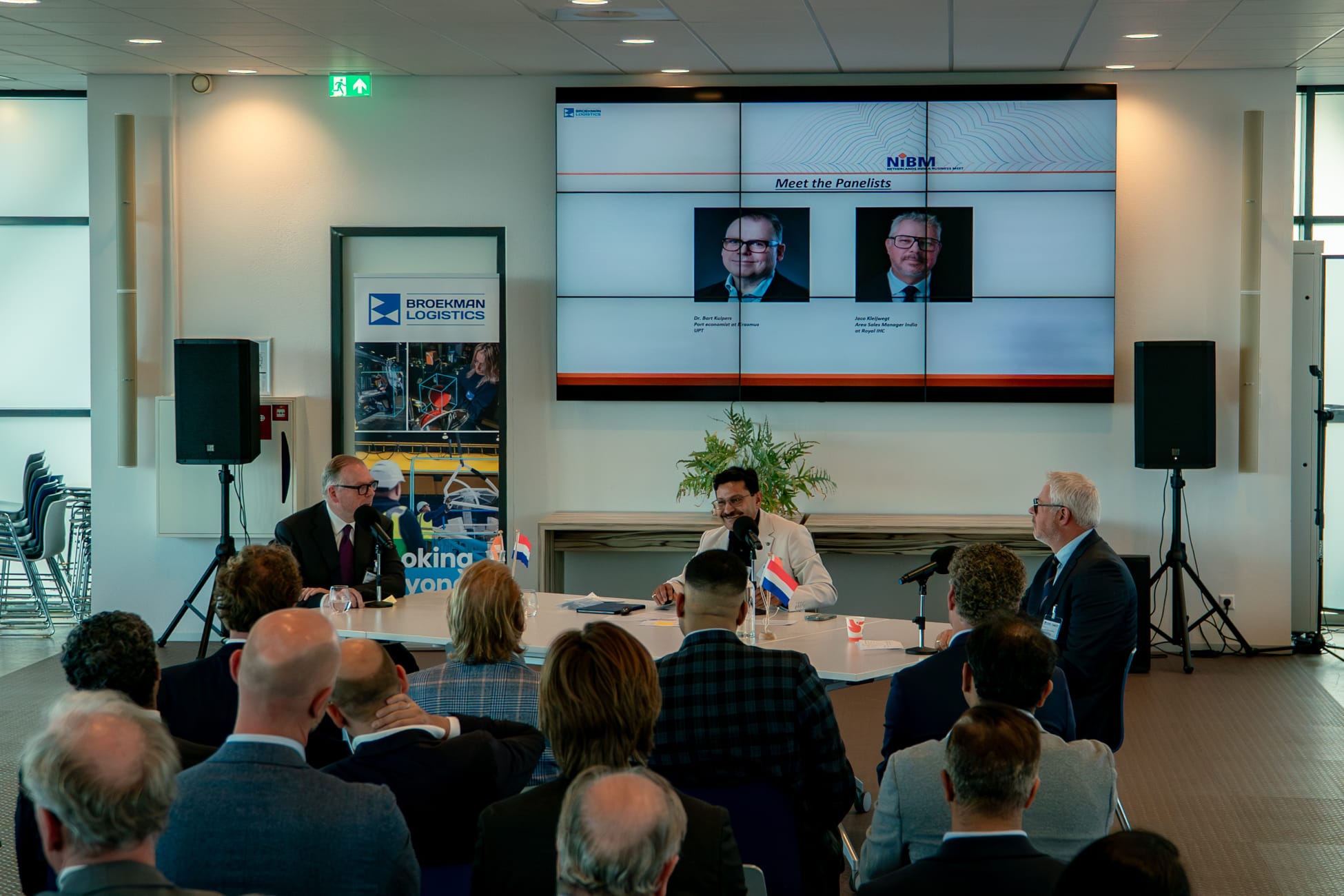
A second discussion zoomed in on shipbuilding and energy infrastructure. Jaco Kleijwegt of Royal IHC pointed to the long investment rhythm of the maritime industry. “You build a ship for forty years. Then you already have to think about a fuel that will still be viable then.” He sees green hydrogen as a future option but acknowledged that LNG remains a realistic interim solution for now.
According to Kleijwegt, the technology for alternative fuels is available, but market conditions hinder development. “The investment is high and fossil fuel remains cheap. Major players like APM Terminals can make the difference.” Port economist Bart Kuipers agreed. He stated that the greening of logistics is driven by customer demands. “Multinationals like Nike demand CO2-neutral chains. That pressure moves faster than legislation.”
Moderator Vipin Moharir, Group Chief Strategy Officer at Gateway Group pointed to the economic limits of sustainability. “Hydrogen ships are great, but if they sail for five days where others can do three weeks, it stops.” He called for joint R&D projects and more technology transfer between countries. “Many startups still don’t reach India.”
Royal IHC is now working on knowledge sharing in India. The company supports the construction of dredgers in Cochin, supplies designs and parts, and is expanding its team of engineers in Mumbai. “We used to build everything in the Netherlands. Now we do it locally, for local and global markets,” said Kleijwegt.
According to Kuipers, there is an opportunity in mutual investments. “Why shouldn’t India, like China, have a stake in the infrastructure of Rotterdam?” Academic cooperation also plays a role in this. “We give lectures in India, receive researchers here. That exchange works both ways.”
The innovation climate in the Netherlands can be a catalyst in this, according to him. “Programs like PortXL bring the best ideas in the world to Rotterdam. That approach could also work with Indian technologies.”
Kleijwegt concluded with a call. India is investing in shipbuilding clusters and wants to increase its own maritime capacity. “But building a yard is not enough. You also need suppliers: engines, doors, electronics.” For Dutch suppliers, there is an open market. “And if you want to do business in India,” he added, “then you mostly need one thing: patience.”

During the event at Broekman Logistics’ headquarters, three companies presented innovative solutions to the audience. The public had the opportunity to vote for one of these Anchors of Innovation to receive an award.
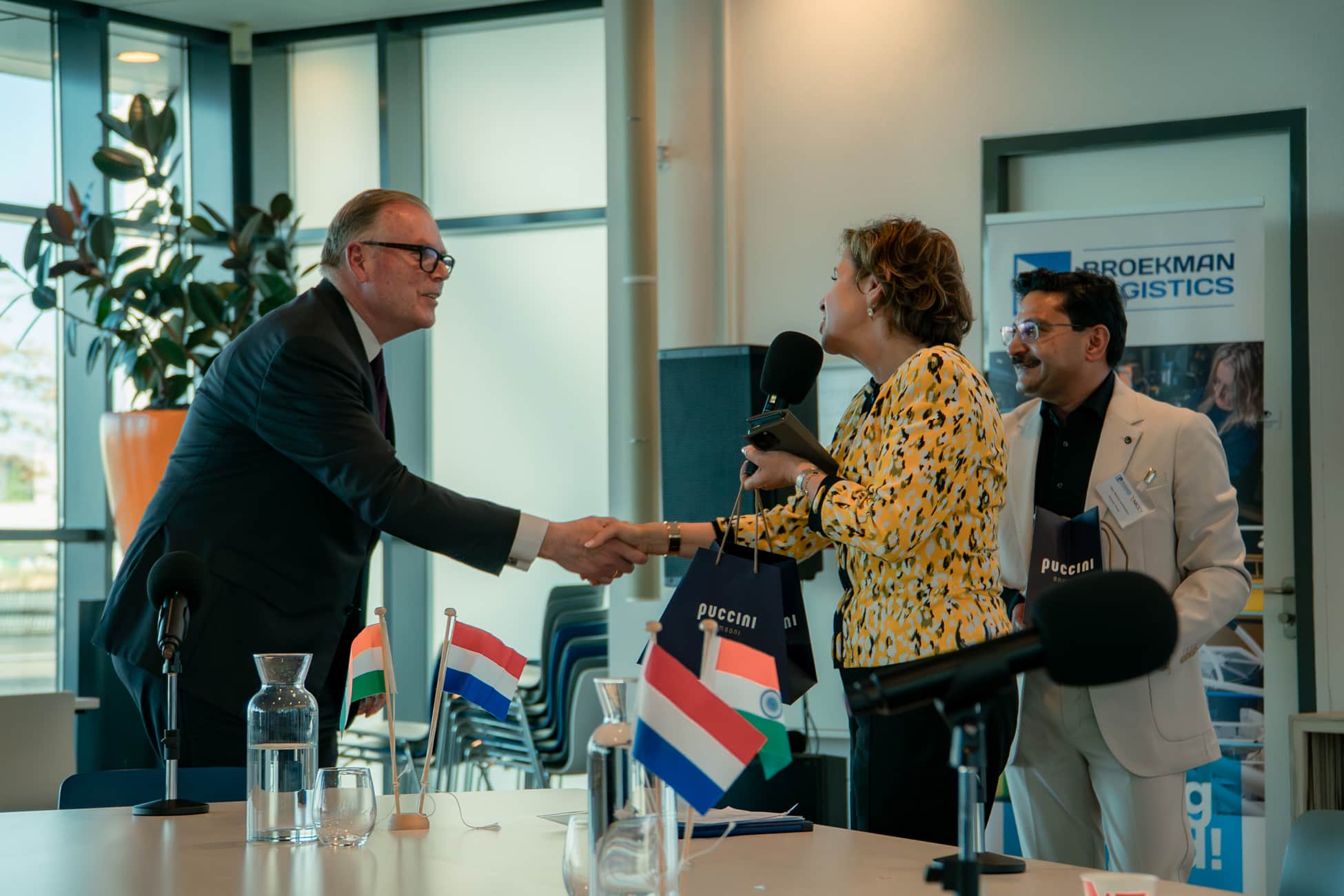
The award was ultimately presented to Timo Pauel, Business Development Manager at QuinteQ Energy. The other nominees were Omniwind and Surpluss.
Left: Edith Nordmann, right: Timo Pauel