International Freight Forwarding Benelux Updates - Broekman Logistics
close

UPDATE: Middle East Situation

International Freight Forwarding Benelux Updates

Stay informed about the latest operational developments related to the Middle East situation. This page provides updates on service changes, booking restrictions, surcharges, and other relevant impacts on your supply chain.


Air Cargo Update

Ongoing airspace restrictions and geopolitical tensions in the Middle East continue to negatively affect the global air cargo supply chain. Industry sources report increasing operational complexity as airlines are forced to avoid certain airspaces, resulting in longer routings and reduced network flexibility.

The impact is particularly noticeable on trade lanes connecting Asia, the Middle East and Europe. Reduced hub connectivity and ongoing rerouting are contributing to tighter capacity and less predictable transit times across these corridors.

In addition, elevated operational costs and risk considerations remain key factors influencing airline capacity deployment. As a result, air cargo markets continue to experience volatility, with frequent adjustments to schedules and routing decisions.

We continue to monitor the situation closely and will provide updates as developments evolve.

Air Cargo Update

Recent market data shows a decline in global air cargo volumes in early March, driven by ongoing airspace restrictions and operational disruptions in the Middle East. These developments have reduced available capacity and altered routing patterns across several international trade lanes.

The impact has been most visible in the Middle East and South Asia region, where both cargo volumes and capacity declined sharply. Reduced activity at major Gulf hubs has also affected transit flows between Asia and Europe, contributing to tighter capacity on long‑haul routes.

In parallel, higher jet fuel prices and increased war‑risk insurance costs are adding pressure to airline operations, resulting in continued volatility in air cargo capacity and pricing.

Iran introduces controlled transit corridor

Recent maritime reports indicate that Iran has begun facilitating a controlled shipping corridor through its territorial waters in the Strait of Hormuz for selected and pre‑approved vessel transits.

According to industry sources, several governments are currently in direct coordination with Iranian authorities to enable limited vessel movements under a newly introduced vetting and registration process. These transits are reportedly conducted on a case‑by‑case basis, subject to approval and advance disclosure of vessel and cargo details.

What does this means?

  • A limited number of vessels have already transited via this route following prior approval
  • Movements are closely monitored and do not indicate a return to normal traffic flows
  • Clearance through the corridor does not remove operational or security risks, according to maritime security experts
  • The approval framework remains under development and may change at short notice

Despite these developments, the Strait of Hormuz continues to be regarded as a high‑risk maritime area, with many carriers maintaining restrictions on transits

Global Shipping Landscape

Instability in the Middle East is affecting global container flows, with carriers avoiding high‑risk areas around the Strait of Hormuz. This leads to adjustments in schedules, transit times and cost structures.

Key operational signals:

  • Strait of Hormuz traffic down by 97% following missile and drone activity.
  • Vessel incidents reported, including ONE Majesty and the Maersk‑operated Source Blessing.
  • Insurance premiums at record highs, with VLCC transits costing USD 10–14 million.
  • Bunker prices increasing sharply, with VLSFO above USD 1,000/tonne in Singapore.

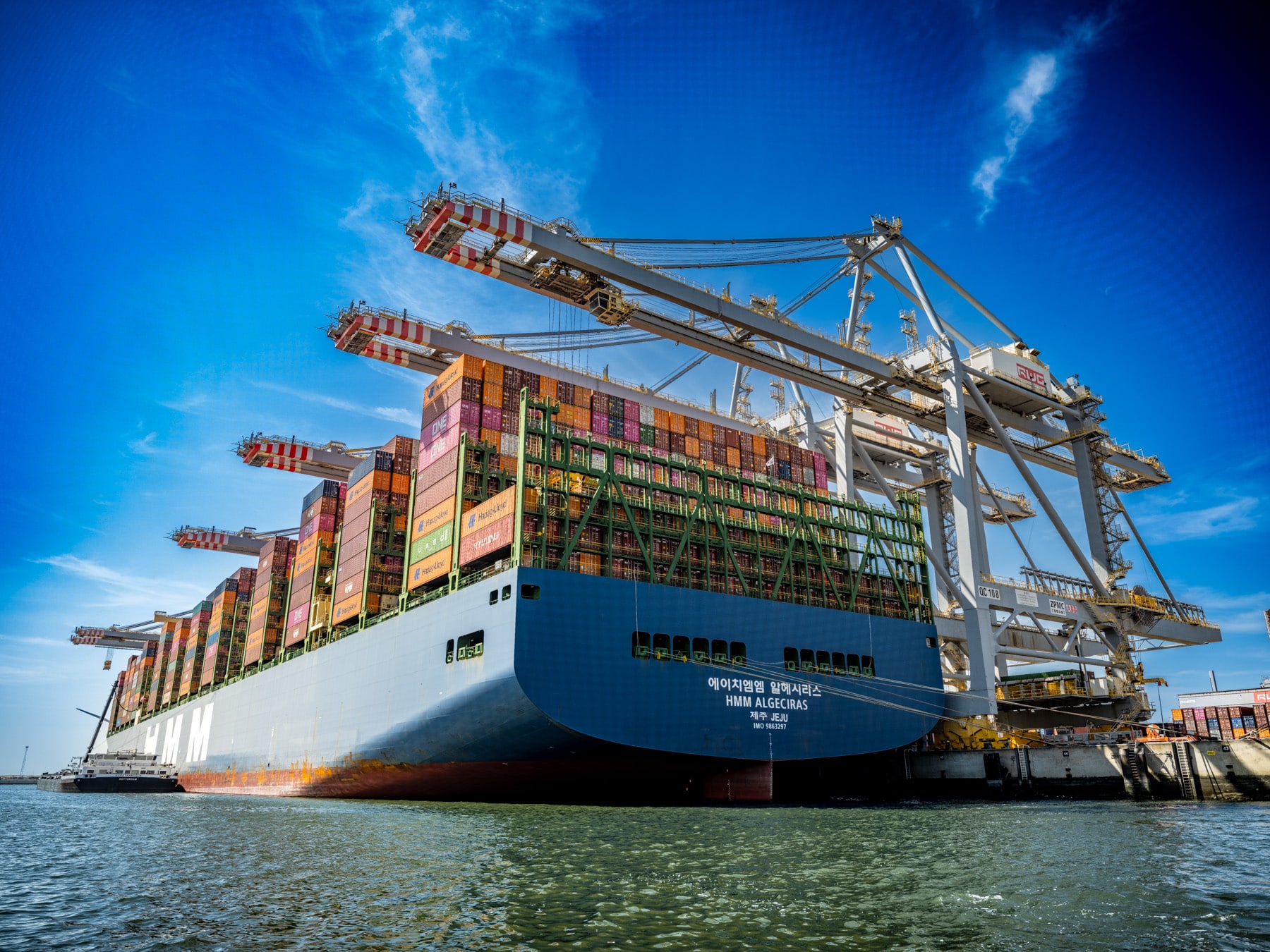
To keep cargo moving, carriers are reshaping their networks. Many are bypassing the Persian Gulf entirely, using Jeddah as an overland gateway into the region, or introducing alternative solutions via Mersin (Türkiye) and King Abdullah/Jeddah (Saudi Arabia) for shipments to the Gulf and Iraq. Several alliances have adjusted long‑haul services, extended rotations or added strategic calls to stabilise capacity — including the Ocean Alliance expanding its Pearl service (7 → 13 vessels) and the Premier Alliance revising schedules with an added call at Algeciras.

Alongside these routing adjustments, fleet developments also continue. Wan Hai has placed orders for six new LNG/dual‑fuel vessels (6,000–9,200 TEU), while industry reports note isolated operational incidents such as container losses from Hapag‑Lloyd’s Ionikos off Casablanca and the retirement of Matson’s 43‑year‑old ConRo vessel Mokihana. Longer‑term infrastructure moves, such as MSC’s 45‑year concession to develop a new terminal in Lagos, help reinforce global network resilience.

Alternative Ocean Freight Routes Available  

Ocean Freight

Recent developments in the Middle East region have led to temporary adjustments in several key maritime corridors. To ensure continuity in your supply chain, alternative sea freight routes are currently available to help bypass affected areas, including the Strait of Hormuz.

Our teams are closely monitoring all operational changes and are working with our global network to identify the most suitable solutions for each shipment. Depending on your cargo requirements and destination, we can advise on the best available routing options to maintain reliability and minimise disruption.

In addition to operational changes, the current situation continues to influence ocean freight rates and surcharges across global trade lanes.

Should you have any questions, your Broekman Logistics representative will be happy to assist you.


Diesel Surcharge Adjustment          

Reflecting Market Movements

Due to recent developments and rising tensions in the Middle East, diesel prices are showing significant weekly volatility. As a result, we are moving from a monthly fluctuating diesel surcharge to a weekly surcharge, effective immediately.

This change allows us to reflect real‑time market movements more accurately and maintain a transparent and fair cost structure. We will publish the applicable weekly surcharge here, based on the latest diesel price developments.

Should you have any questions, your Broekman Logistics representative will be happy to assist you.


Our Experts Are Ready to Help                    

Vincent Korporaal

The Netherlands
Contact me

Boy Kortekaas

The Netherlands
Contact me

Nathalie Douillez

Belgium
Contact me
arrow_back
arrow_forward